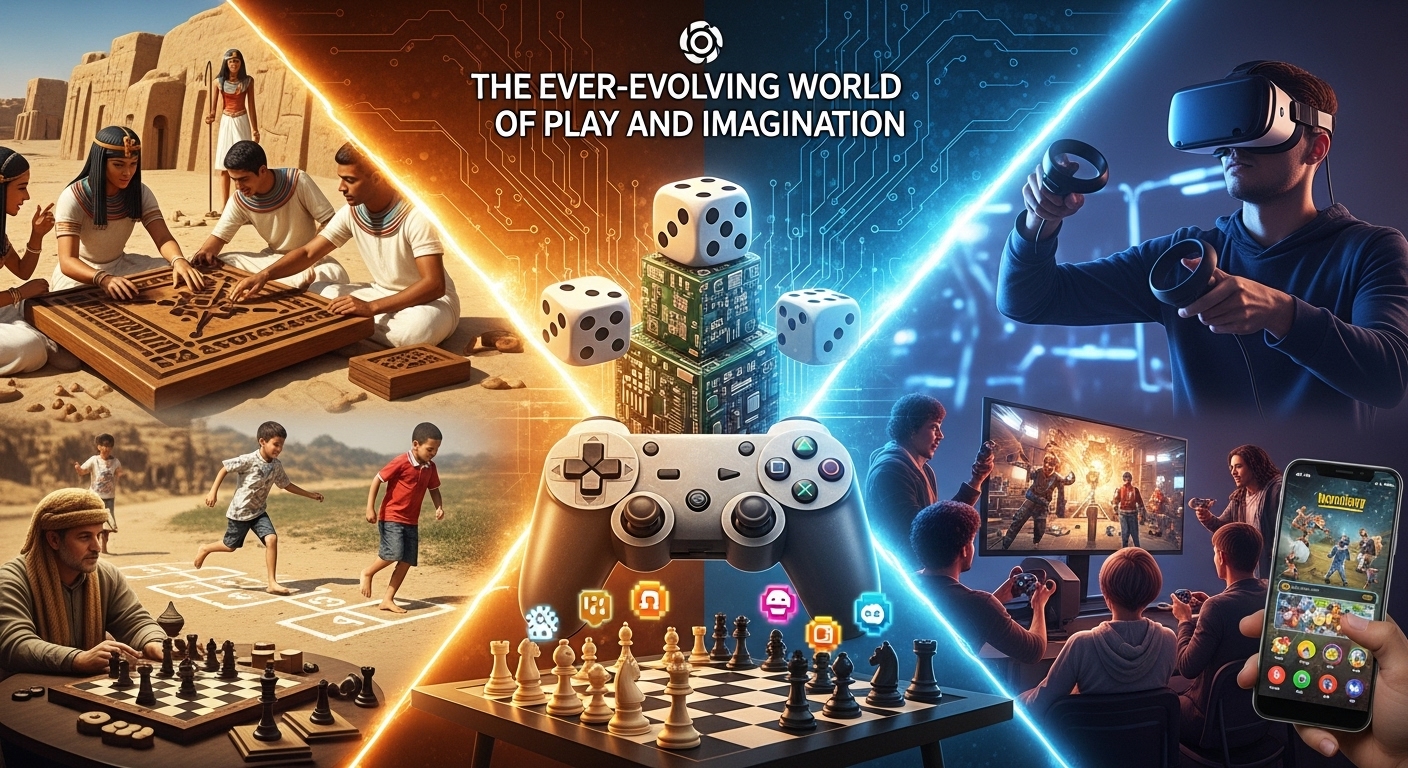







Gaming has evolved over the decades from simple 8-bit graphics to sprawling open worlds and deeply intricate narratives. While mainstream games continue to captivate the masses, there’s an entire world of unique, innovative titles that stand out for their unconventional gameplay mechanics, stories, and designs. These games often challenge traditional gaming norms, pushing boundaries and offering experiences that are not only entertaining but thought-provoking. In this blog, we’ll delve into some of the most unique and remarkable games in the industry, exploring what makes them special and why they deserve more attention.
The Art of Experimentation in Gaming
Games are not just a form of entertainment anymore; they have become an art form. From visually stunning titles to those that explore profound psychological themes, the gaming industry has embraced experimentation in every facet. The uniqueness of a game is often found in its willingness to challenge the norm — whether through storytelling, game mechanics, or the very essence of what a game is supposed to be. These games don’t just ask for player interaction; they push players to think, feel, and react in new ways.
While traditional games tend to follow a formula — shoot, explore, or solve puzzles — unconventional games go beyond that, often breaking the fourth wall and forcing players to redefine their expectations of what a game can be. Games like Journey, Braid, and Papers, Please are prime examples of this trend. These games focus on aspects of gameplay that are often overlooked in mainstream titles, such as emotional resonance, narrative complexity, and novel mechanics.
Journey: A Journey of Emotion and Exploration
One of the most profound examples of a game that defies conventions is Journey (2012), developed by Thatgamecompany. The game offers a serene, almost meditative experience where the player controls a robed traveler in a vast desert. What makes Journey unique is not just its breathtaking visual style, but its approach to multiplayer interactions. Players can encounter one another in the desert, but they cannot communicate through words or traditional gameplay mechanics. Instead, they can only communicate through gestures and musical chimes.
This simple yet brilliant design decision creates a deep sense of connection and wonder, as players are not fighting or competing but sharing the journey together. Journey is a meditation on companionship, isolation, and the emotional highs and lows of human existence, all presented through a minimalist lens. It’s a game that asks the player to reflect on their experience of life, as well as their connection to others, without ever speaking a word.
Braid: A Mind-Bending Puzzle Experience
If there’s one game that exemplifies how unique mechanics can elevate a simple premise into something unforgettable, it’s Braid (2008). Developed by Jonathan Blow, Braid is a side-scrolling puzzle platformer that revolves around time manipulation. The protagonist, Tim, embarks on a quest to save a princess, but the true focus is on how time can be bent and twisted in unusual ways to solve intricate puzzles.
What makes Braid unique is its exploration of time as a core mechanic, not just as a passive element in the background. Each world in Braid introduces a new way to manipulate time: rewinding, slowing down, or even pausing. The game challenges players to think about the consequences of their actions, and it does so without ever explaining itself too directly. Through this, Braid not only offers challenging puzzles but also a profound commentary on the nature of regret, mistakes, and memory.
Furthermore, Braid tells its story not through dialogue but through subtle visual cues and the gameplay itself. It’s a game that rewards players for their intellect and curiosity, encouraging them to think deeply about its underlying themes.
Papers, Please: A Morally Complex Simulation
Sometimes, the most unique games are the ones that make players uncomfortable. Papers, Please (2013), developed by Lucas Pope, is a dystopian simulation where players take on the role of a border crossing immigration officer in the fictional country of Arstotzka. The task seems simple at first: check the documents of immigrants and allow or deny entry based on their papers. But as the game progresses, the complexity deepens, and moral dilemmas emerge.
The uniqueness of Papers, Please lies in its ability to make players question their ethics in a controlled, bureaucratic environment. The game asks players to weigh their personal morals against the demands of the state, forcing them to decide whether to follow rules or bend them for personal gain or human compassion. Throughout the game, players must confront decisions that have far-reaching consequences, impacting not only the immigrant characters but also their own survival and well-being.
By putting players in a position of power, Papers, Please forces them to grapple with the inherent responsibilities and consequences of their actions. It’s an introspective, sometimes harrowing experience, one that showcases how a simple premise can be transformed into a thought-provoking commentary on bureaucracy, humanity, and ethics.
Outer Wilds: The Endless Curiosity of Space Exploration
If you’ve ever dreamed of exploring the vast unknown of outer space, Outer Wilds (2019) offers an experience unlike any other. Developed by Mobius Digital, this action-adventure game puts players in the shoes of a space explorer in a small solar system, which is on the verge of destruction. The twist? The game operates on a time loop, where every 22 minutes, the universe resets, and the player is forced to start again. However, with each loop, players retain the knowledge they’ve gained, allowing them to uncover new secrets and mysteries.
What makes Outer Wilds so unique is how it combines exploration with an existential sense of wonder. Instead of focusing on combat or traditional goals like leveling up, the game’s primary mechanic revolves around curiosity. Players are encouraged to explore every planet and interact with its peculiar ecosystems, learning about the history and future of the solar system in the process. The time loop mechanic, which might seem like a constraint, actually enhances the sense of discovery, as players must use their growing knowledge to piece together the mysteries of the universe.
The game is a beautiful blend of exploration, puzzle-solving, and narrative storytelling, and it’s one of the few games that can evoke a true sense of awe and wonder, making it a standout in the genre of space exploration.
The Stanley Parable: A Meta Commentary on Choice and Free Will
When it comes to games that break the fourth wall, few do it as effectively as The Stanley Parable (2013). Developed by Davey Wreden and William Pugh, this first-person exploration game plays with the idea of choice, free will, and narrative structure. The player controls Stanley, an office worker who suddenly finds himself alone in a strange, empty building. As Stanley explores, he encounters a narrator who guides his actions — but the player is free to choose whether or not to follow the narrator’s instructions.
The brilliance of The Stanley Parable lies in its ability to play with player expectations. The narrator comments on the player’s choices, sometimes even criticizing them for not following the intended path. The game presents players with a series of seemingly trivial decisions, only for the consequences of those decisions to reveal profound insights into the nature of choice, agency, and storytelling in video games.
The Stanley Parable is a self-aware, almost philosophical journey that challenges conventional ideas about player agency and linear narrative. It’s a game that constantly questions the nature of the player’s interaction with the game world, offering a commentary on the very medium of video games.
Unravel: The Beauty of Simplicity
In a world dominated by complex narratives and intricate mechanics, Unravel (2016) offers a refreshing, simple yet powerful experience. Developed by Coldwood Interactive, this puzzle platformer tells the story of Yarny, a small figure made of red yarn, who embarks on a journey through beautiful, natural environments. The game’s central mechanic revolves around Yarny’s yarn unraveling as he progresses through the levels, with players using this feature to solve puzzles and traverse the landscape.
What sets Unravel apart from other puzzle platformers is its emotional resonance. The story of Yarny is told without words, relying on the beauty of the environment and the connection between the player and the character to convey its narrative. The game explores themes of love, loss, and memory, drawing from the player’s own emotions to create a deeply personal experience.
In addition to its emotional depth, Unravel boasts stunning visuals that capture the beauty of the natural world, from lush forests to coastal cliffs. It’s a game that celebrates the simplicity of life and the importance of connections, all through the lens of a small, red yarn figure.
Conclusion: Embracing the Unconventional
In an era where gaming has become mainstream entertainment, it’s easy to overlook the games that don’t follow the usual trends. Yet, it’s these unconventional titles that often offer the most memorable and meaningful experiences. Whether through innovative mechanics, thought-provoking narratives, or unique art styles, these games redefine what it means to be a “game” and push the boundaries of the medium.
By embracing experimentation and thinking outside the box, these developers have shown that video games can be more than just a way to pass time — they can be a source of art, introspection, and genuine emotional connection. As the gaming industry continues to evolve, it’s clear that there will always be a place for the unconventional, the strange, and the unique.
If you haven’t already, it’s time to step outside the familiar and experience some of these games that don’t just entertain, but challenge the very concept of what a game can be.