






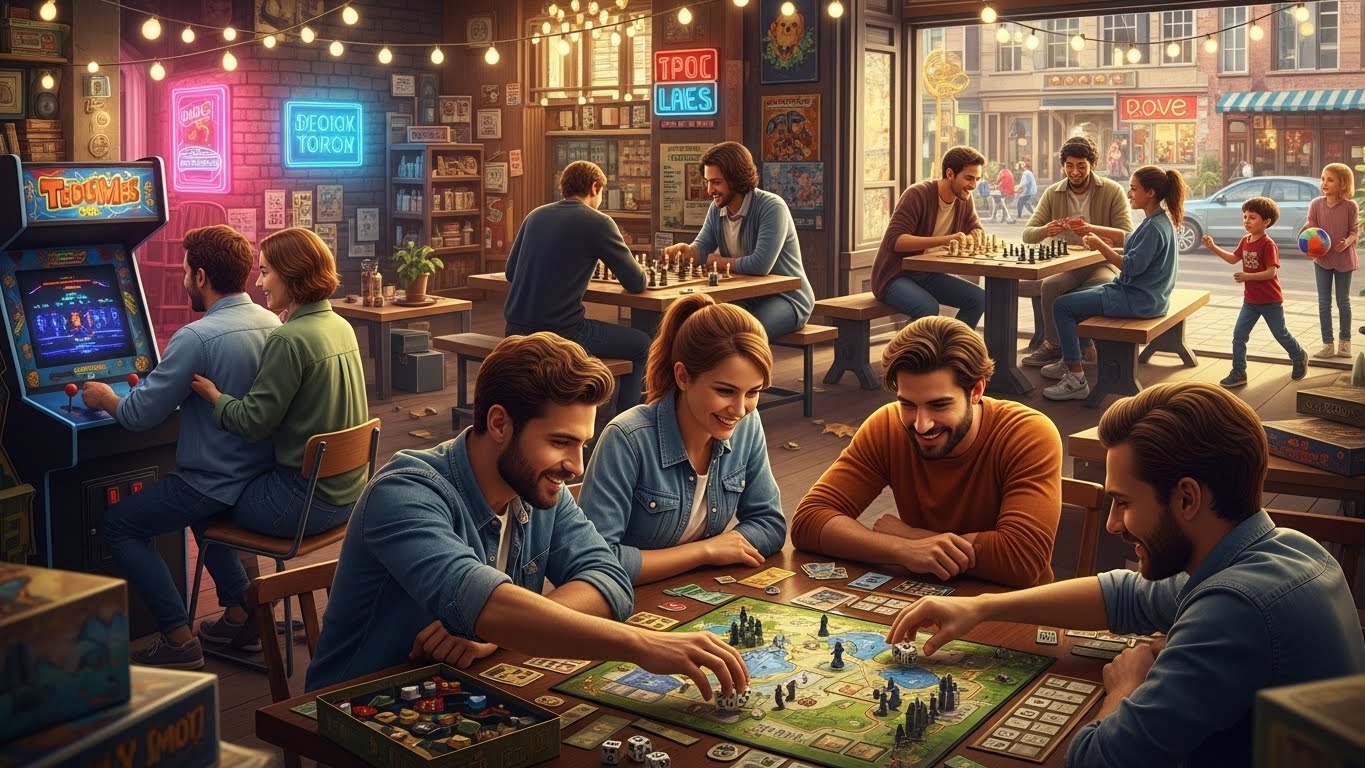
Games have always been more than just a pastime. From ancient board games to modern digital adventures, they challenge our minds, inspire creativity, and foster social connections. The world of games spans countless genres, platforms, and experiences, offering entertainment while also influencing culture, education, and technology. In this blog post, we will explore the evolution of games, their impact on society, the psychological benefits they provide, and what the future holds for interactive play.
The Ancient Roots of Games
Games are not a modern invention; they have existed for thousands of years. Archaeological discoveries reveal that civilizations such as Mesopotamia, Egypt, and China created board games, dice, and puzzles. These games were more than entertainment—they served as tools for strategy, problem-solving, and social bonding.
For instance, the ancient Egyptian game Senet was played over 5,000 years ago and involved strategic movement across a board. Similarly, the Chinese game Go has challenged players for centuries, emphasizing planning, patience, and tactical thinking. These early games set the stage for modern gameplay, proving that humans have long sought interactive challenges and ways to engage with others.
The Evolution of Video Games
The landscape of gaming dramatically shifted in the 20th century with the rise of electronic games. In the 1970s, arcade machines introduced players to games like Pong and Space Invaders, offering a new form of entertainment that combined reflexes with competition.
The 1980s and 1990s marked the golden era of console gaming. Companies like Nintendo and Sega popularized home consoles, introducing iconic characters such as Mario, Sonic, and Link. During this period, games evolved from simple challenges to rich storytelling experiences, with puzzles, strategy, and exploration becoming core elements.
The 2000s brought online multiplayer gaming, connecting players across the globe. Games like Counter-Strike, World of Warcraft, and Halo created communities where collaboration, teamwork, and communication were essential. This era highlighted the social dimension of gaming, proving that games could build real-world friendships and global networks.
Today, games are available on a variety of platforms including consoles, PCs, mobile devices, and virtual reality systems. The diversity of genres—from strategy to role-playing to simulation—ensures that there is a game for everyone. Gaming has become a cultural cornerstone, blending art, technology, and entertainment.
The Cultural Impact of Games
Games have transcended simple entertainment to become influential cultural phenomena. Popular franchises like The Legend of Zelda, Fortnite, and Call of Duty have not only shaped gaming culture but also impacted music, fashion, and storytelling.
Esports has emerged as a major global industry, attracting millions of spectators and offering professional players lucrative careers. Competitive gaming tournaments showcase skill, strategy, and entertainment on a scale rivaling traditional sports.
Gaming communities, both online and offline, foster collaboration and creativity. Players share strategies, create fan art, and even develop mods that alter or enhance games. This collaborative culture illustrates that games are as much about social interaction and creativity as they are about play.
The Psychological and Cognitive Benefits of Gaming
Gaming offers numerous psychological and cognitive advantages. Strategy and puzzle games enhance problem-solving skills, critical thinking, and decision-making abilities. Action and simulation games improve reaction times, hand-eye coordination, and multitasking skills.
Role-playing and narrative-driven games encourage empathy and moral reasoning. Players often make choices that have consequences, allowing them to explore complex scenarios in a safe, virtual environment. These experiences can improve social understanding and emotional intelligence.
Gaming also provides mental health benefits. Immersive experiences can reduce stress, offer relaxation, and provide an escape from daily pressures. Cooperative and multiplayer games foster teamwork and social connection, which are essential for emotional well-being.
Games as Tools for Education
Beyond entertainment, games have significant educational potential. Educational and “serious” games teach subjects such as history, science, language, and mathematics through interactive experiences. Gamification—the application of game mechanics in non-game contexts—motivates learners by incorporating points, levels, and rewards.
Simulation games allow players to experiment in virtual worlds, learning through trial and error. For example, city-building games teach resource management and urban planning, while science simulations allow experimentation with physics and chemistry concepts. These experiences make learning engaging, memorable, and practical.
Social Interaction Through Games
One of the most profound aspects of gaming is its ability to connect people. Multiplayer games encourage collaboration and competition, helping players develop communication skills, empathy, and teamwork. Online guilds, clans, and communities provide social support, networking opportunities, and shared experiences.
Games also bridge generational gaps. Families and friends often play together, creating memorable moments and strengthening relationships. Cooperative gameplay encourages understanding and mutual support, while competitive play teaches resilience and sportsmanship.
The Economic Influence of Gaming
The gaming industry is a global economic powerhouse. It generates billions in revenue annually, encompassing game development, marketing, distribution, and content creation. The industry provides employment opportunities for programmers, designers, writers, composers, and artists.
Content creation, streaming, and esports have created entirely new career paths. Professional gamers, commentators, and influencers earn livelihoods while sharing their passion with a global audience. This economic expansion demonstrates that gaming is not just entertainment but a significant sector with wide-reaching impact.
The Diversity of Game Genres
The variety of game genres ensures that players can find experiences suited to their tastes and skills. Role-playing games offer immersive narratives and character development. Strategy games challenge logic and resource management. Adventure games focus on exploration and storytelling, while puzzle games test creativity and analytical thinking.
Simulation games allow players to manage virtual environments, from cities to farms, offering realistic problem-solving experiences. Sports and racing games provide fast-paced excitement and competitive thrills, while casual games on mobile devices make gaming accessible to broader audiences.
Technological Advancements and Gaming
Technology has transformed the gaming experience, making it more immersive and interactive. Virtual reality (VR) allows players to step into fully realized 3D worlds. Augmented reality (AR) blends digital elements with the physical environment, creating new forms of play.
Artificial intelligence enhances non-player character behavior, adapts challenges to individual skill levels, and personalizes gameplay. Cloud gaming enables high-quality experiences on low-end devices, making games accessible to a wider audience.
These advancements point toward a future where gaming experiences are highly personalized, fully interactive, and seamlessly integrated into daily life.
The Future of Gaming
The future of games promises unprecedented possibilities. As technology continues to evolve, games will become more immersive, dynamic, and adaptive. Virtual and augmented reality will provide new ways to explore digital worlds, while artificial intelligence will create unique, evolving experiences for each player.
Esports and online communities will continue to grow, providing platforms for global collaboration and competition. The lines between gaming, education, and entertainment will blur, making games a central part of cultural, social, and economic life.
Gaming will also expand into creative storytelling and social impact. Players will be able to influence narratives, participate in virtual societies, and explore ethical and philosophical dilemmas in ways that were previously impossible. The possibilities are limited only by imagination.
Conclusion
Games are far more than leisure activities. They are complex cultural artifacts that entertain, educate, and connect people across the world. From ancient board games to modern digital universes, games challenge the mind, foster creativity, and provide social and psychological benefits.
The gaming industry continues to grow and evolve, shaping culture, technology, and human interaction. With advancements in virtual reality, artificial intelligence, and interactive storytelling, the future of games promises experiences that are more immersive, dynamic, and meaningful than ever before.
Games are not just about play—they are about learning, exploring, creating, and connecting. They are a testament to human creativity, ingenuity, and the enduring desire to engage with the world and with each other. Whether you are a casual player, a competitive gamer, or someone who enjoys the social and educational aspects of games, there has never been a better time to be part of this vibrant and ever-expanding universe.