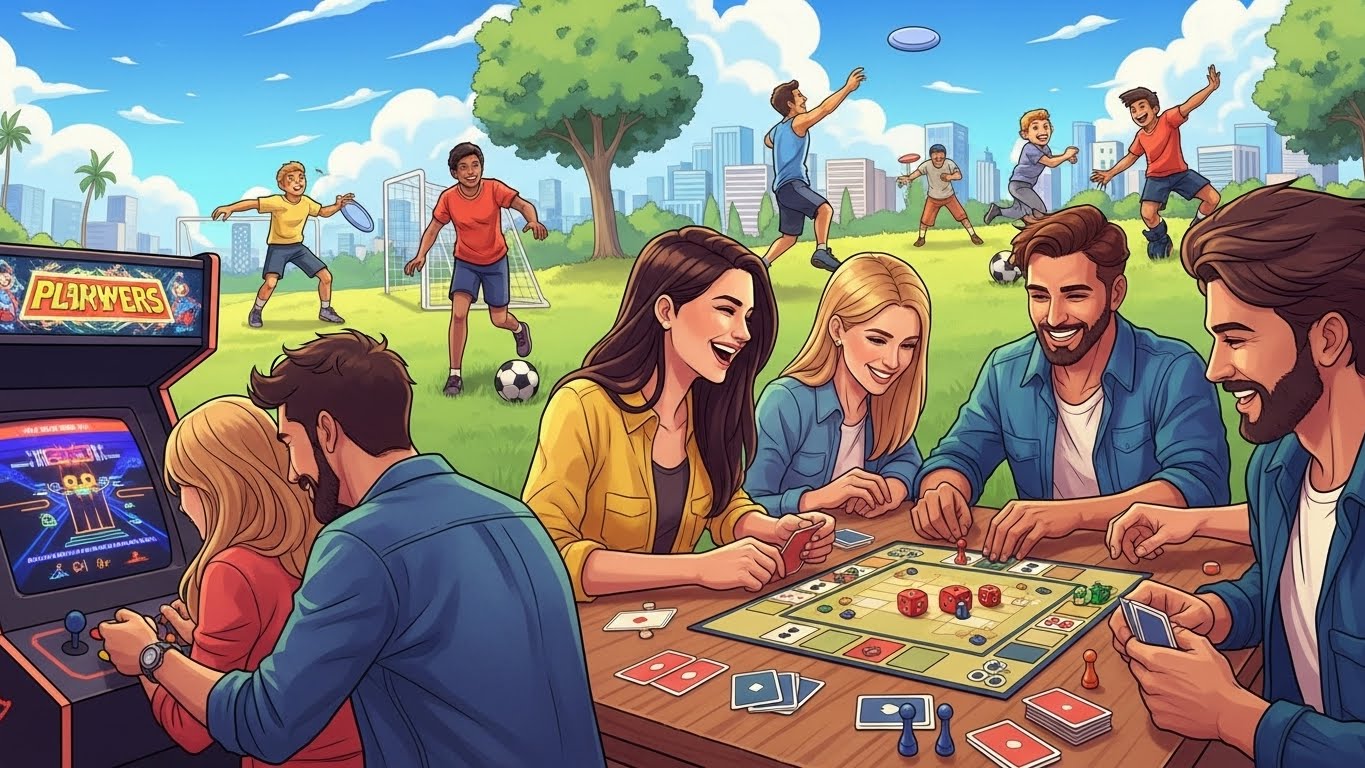






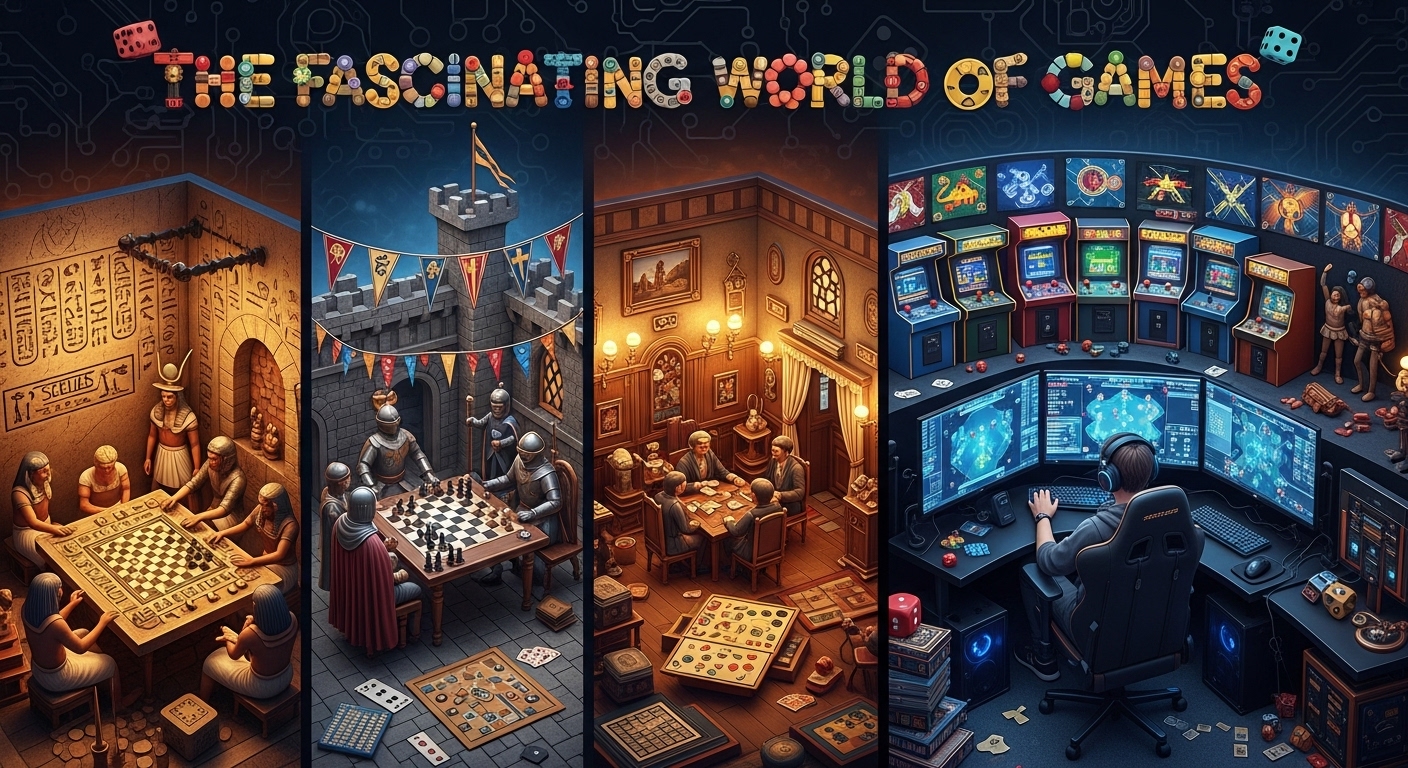
Games have always been more than just a form of entertainment. They are an expression of human creativity, skill, imagination, and emotion. From the simplest board games played thousands of years ago to the vast, open-world digital experiences of today, games have evolved into one of the most powerful and influential mediums in modern culture. The world of games encompasses countless genres, technologies, and styles, each offering unique experiences and lessons. This blog explores the magic, history, psychology, and future of games, uncovering why they continue to captivate the human spirit generation after generation.
The Ancient Origins of Gaming
Before electricity, screens, or consoles, humans were already gamers. Archaeological evidence suggests that games like Senet in ancient Egypt or Go in China were played more than four thousand years ago. These early games were not merely diversions; they often carried spiritual or social meanings. Senet, for example, was believed to represent the journey of the soul to the afterlife, while Go symbolized balance and strategy, reflecting the philosophical harmony of life.
Games such as chess, which emerged in India as “Chaturanga,” later spread across the world and became a symbol of intelligence and strategic thought. Dice games, card games, and sports gradually developed across cultures, representing the universal human desire for challenge and competition. Every civilization seemed to have its version of play, showing that games are as ancient as storytelling itself.
The Birth of Modern Games
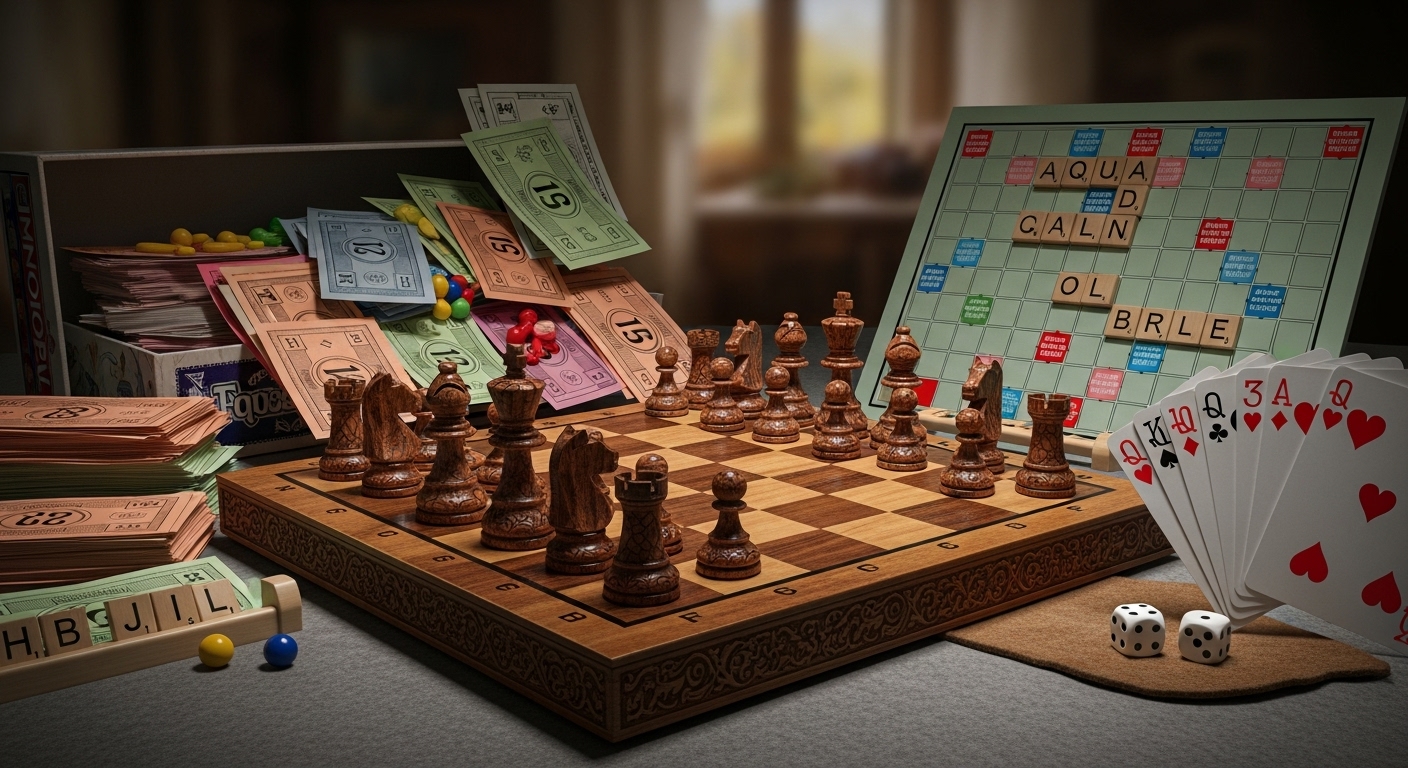
The modern age of gaming began in the 20th century, as mechanical and tabletop games evolved into forms closer to what we recognize today. Monopoly, Scrabble, and Clue became household names, introducing the idea of games as social experiences for families and friends. These board games encouraged logic, negotiation, and creativity, blending fun with skill development.
As technology advanced, the concept of gaming shifted dramatically. The first video games, such as Pong and Space Invaders, appeared in arcades during the 1970s. These simple pixelated experiences laid the foundation for an entirely new industry. For the first time, players could interact directly with digital worlds, controlling movement, outcomes, and strategy through machines.
This revolution changed not only how people played but also how they connected. Arcades became social spaces filled with excitement, noise, and friendly competition. Games were no longer just about winning; they were about belonging to a culture of shared experiences.
The Golden Era of Consoles and Home Entertainment
The 1980s and 1990s marked a defining period in gaming history. Companies like Nintendo, Sega, and Sony transformed games into cultural icons. Mario, Sonic, and later, Lara Croft and Cloud Strife became more than characters—they became symbols of entire generations.
Home consoles allowed families to gather around the television and play together. Titles such as The Legend of Zelda introduced immersive storytelling, while Super Mario Bros. mastered the art of platforming perfection. These games balanced simplicity with depth, offering easy-to-learn controls yet endless room for mastery.
The arrival of 3D graphics in the mid-1990s revolutionized how players experienced games. Worlds became more realistic, characters more expressive, and stories more complex. Gaming was no longer confined to simple mechanics; it became a full-fledged art form capable of inspiring emotion and wonder.
The Rise of PC Gaming and Online Worlds
While consoles ruled the living room, personal computers became a hub for a different kind of gaming experience. PC gaming emphasized flexibility, community mods, and technical innovation. Real-time strategy games like Age of Empires and StarCraft pushed players to think critically, manage resources, and outsmart opponents.
Then came the age of online multiplayer games. Titles like Doom, Quake, and later World of Warcraft connected millions of players around the world. Virtual realms emerged where individuals could collaborate, compete, and even live alternative lives. The online experience created friendships, rivalries, and digital communities unlike anything before.
Massively multiplayer online games (MMOs) demonstrated that games could be persistent worlds—constantly evolving, filled with living economies and cultures. In these spaces, players were not just participants but co-creators of experiences.
The Artistic Side of Games
Over time, games matured beyond being simple pastimes. Developers began using games as a medium of artistic expression. Titles such as Journey, Shadow of the Colossus, and The Last of Us proved that video games could evoke deep emotion, moral reflection, and artistic beauty.
Visual design, music, and storytelling merged into powerful experiences. Players no longer just consumed content; they became part of it. The interactivity of games made them a uniquely immersive art form. A film can move you, but a game lets you live the story, feel the weight of choices, and face the consequences.
Independent developers further expanded the artistic horizon. With digital distribution, small teams could create personal and experimental games that reached global audiences. This democratization of creation gave rise to titles that explored themes of identity, grief, love, and philosophy in profound new ways.
The Psychological Power of Play
Games are not only entertainment; they are a reflection of human psychology. They fulfill our desire for achievement, mastery, and social connection. The concept of “flow,” described by psychologist Mihaly Csikszentmihalyi, perfectly explains why games are so addictive. When players face a challenge that matches their skill level, they lose themselves in the activity, achieving a state of total immersion.
Rewards, feedback loops, and progression systems keep players motivated. Every small victory releases dopamine, reinforcing engagement. This is why leveling up in a role-playing game or achieving a new high score feels so satisfying.
Games also offer safe environments to explore risk, failure, and creativity. They teach problem-solving, patience, teamwork, and adaptability—skills that often translate into real life. Educational games, for instance, use the power of play to make learning enjoyable and effective.
The Expansion into Esports and Competitive Gaming
The rise of esports turned gaming into a legitimate form of professional competition. What started as small community tournaments has grown into a multi-billion-dollar industry watched by millions worldwide. Titles like League of Legends, Dota 2, and Counter-Strike have developed fan bases rivaling traditional sports.
Professional gamers train rigorously, studying strategy, coordination, and reflex optimization. They form teams, sign contracts, and compete for life-changing prizes. Esports organizations and live events fill stadiums, proving that gaming is as thrilling and respected as any athletic endeavor.
The competitive spirit of gaming also inspires casual players. Online ranking systems and leaderboards provide motivation and social validation, keeping communities active and vibrant.
The Role of Technology in Shaping Modern Games
Every major leap in gaming history has been fueled by technological innovation. The introduction of 3D graphics, motion controls, high-definition displays, and virtual reality transformed how players perceive and interact with digital environments.
Today, artificial intelligence plays a key role in creating lifelike characters and dynamic game worlds. Advanced physics engines simulate realistic movement and reactions. Cloud gaming allows players to stream titles instantly without needing powerful hardware.
Virtual reality and augmented reality offer entirely new dimensions of immersion. Players can step inside the world itself, exploring places, solving puzzles, or engaging in combat with natural movement and perception. These technologies blur the boundaries between reality and imagination.
The Social Dimension of Gaming
Games have become powerful social tools, connecting people across continents. Online multiplayer modes, voice chats, and cooperative missions encourage teamwork and communication. Many friendships and even romantic relationships begin through gaming communities.
During times of isolation, such as global lockdowns, games provided comfort and connection. Virtual spaces allowed people to socialize, celebrate events, and escape anxiety. Games like Animal Crossing and Minecraft became digital meeting grounds where creativity and friendship thrived.
Moreover, games have also become platforms for self-expression. Custom avatars, world-building, and modding let players create their own identities and stories. The social fabric of gaming reflects the diversity and creativity of its global audience.
The Business of Games
The gaming industry is now one of the largest entertainment sectors in the world, surpassing movies and music combined. Game development involves a combination of art, programming, storytelling, marketing, and user experience design.
From indie studios to massive AAA developers, the process of creating a game is both creative and technical. Teams spend years designing mechanics, balancing gameplay, and refining details to create memorable experiences.
The business model of games has also evolved. Once dominated by physical sales, the industry has shifted toward digital downloads, microtransactions, and subscription services. While this has provided accessibility, it has also raised debates about ethics, monetization, and player rights.
Still, the creativity and passion of developers continue to drive innovation. Whether it is through expansive open worlds, realistic physics, or touching narratives, the goal remains the same: to create meaningful and enjoyable experiences.
The Future of Gaming
As we look ahead, the future of gaming seems boundless. Artificial intelligence will make game worlds smarter, while virtual and augmented reality will deepen immersion. Haptic feedback will let players feel textures and impact, adding new sensory dimensions to gameplay.
Procedural generation and machine learning could create endless, personalized worlds that adapt to each player’s style and preference. Games might evolve into collaborative storytelling systems, where human creativity and AI design merge seamlessly.
Cloud technology will continue to make high-quality gaming accessible to more people, regardless of hardware limitations. Cross-platform play ensures inclusivity, allowing friends to connect no matter what device they use.
Beyond entertainment, gaming will play an even greater role in education, therapy, and simulation. Doctors already use games to train surgeons, teachers to inspire students, and psychologists to help patients heal through virtual experiences.
The Cultural Significance of Games
Gaming is now a cultural language understood by millions. Game characters and symbols appear in films, fashion, and art. The music of classic titles is performed in symphony halls, while cosplay and conventions celebrate gaming as a form of identity and creativity.
Games influence how we think about stories, technology, and community. They allow players to explore moral dilemmas, experience empathy, and shape narratives through choice. In many ways, games have become mirrors of humanity—showing both our ambitions and our flaws.
They also promote inclusivity and diversity. More developers now focus on representing different cultures, genders, and identities, ensuring that everyone can see themselves reflected in the stories they play.
Conclusion: The Infinite Playground of Imagination
From ancient dice to virtual reality, the story of games is the story of human progress. Games have evolved from simple amusements into complex ecosystems of art, science, and emotion. They teach, challenge, and connect us in ways that few other mediums can.
The essence of gaming lies in participation—the act of doing, exploring, and becoming. Each game invites us to step into another world, take on new roles, and test our creativity and perseverance. Whether played on a board, a screen, or in virtual space, games remain one of the most remarkable ways humans express their need to imagine, compete, and connect.
In the end, the world of games is a reflection of life itself—sometimes strategic, sometimes chaotic, often challenging, but always filled with wonder. As technology evolves and imagination expands, one truth remains constant: the human spirit will always find joy in the simple yet profound act of play.