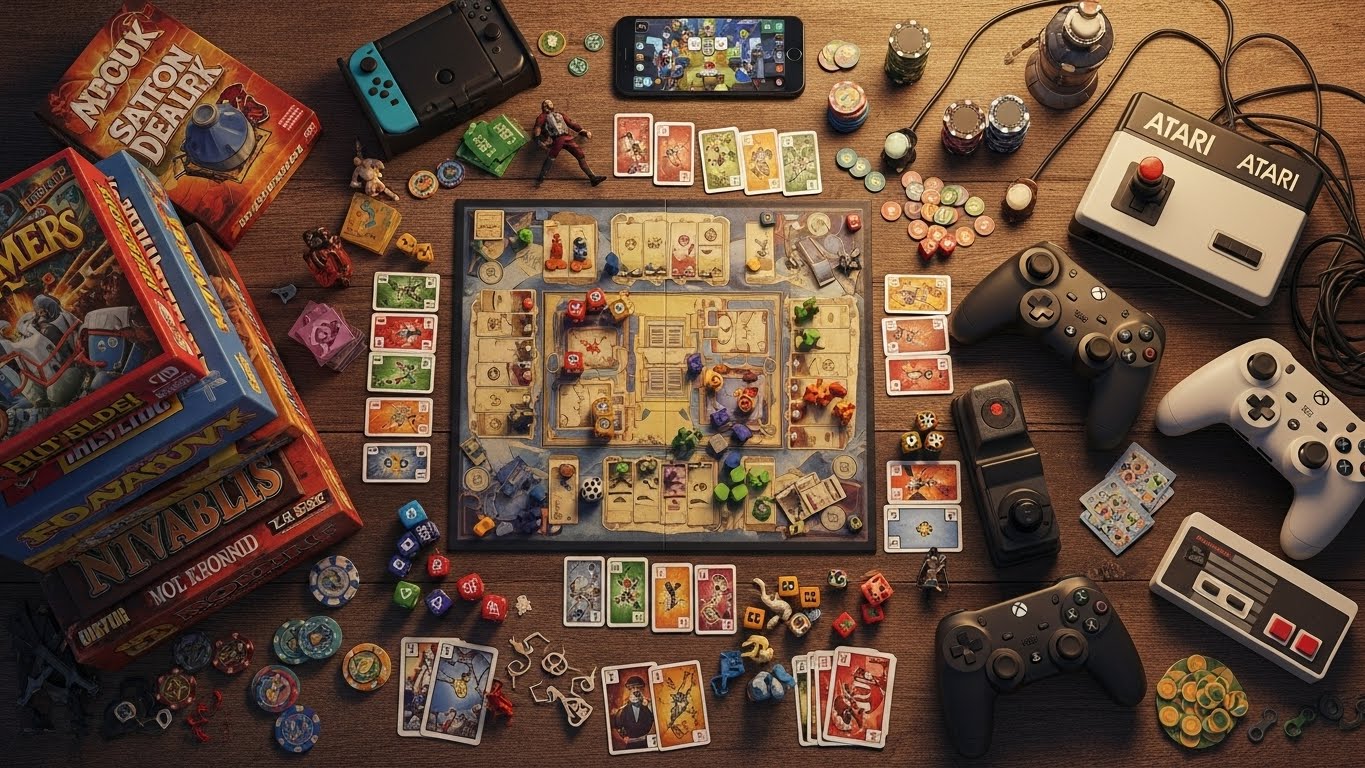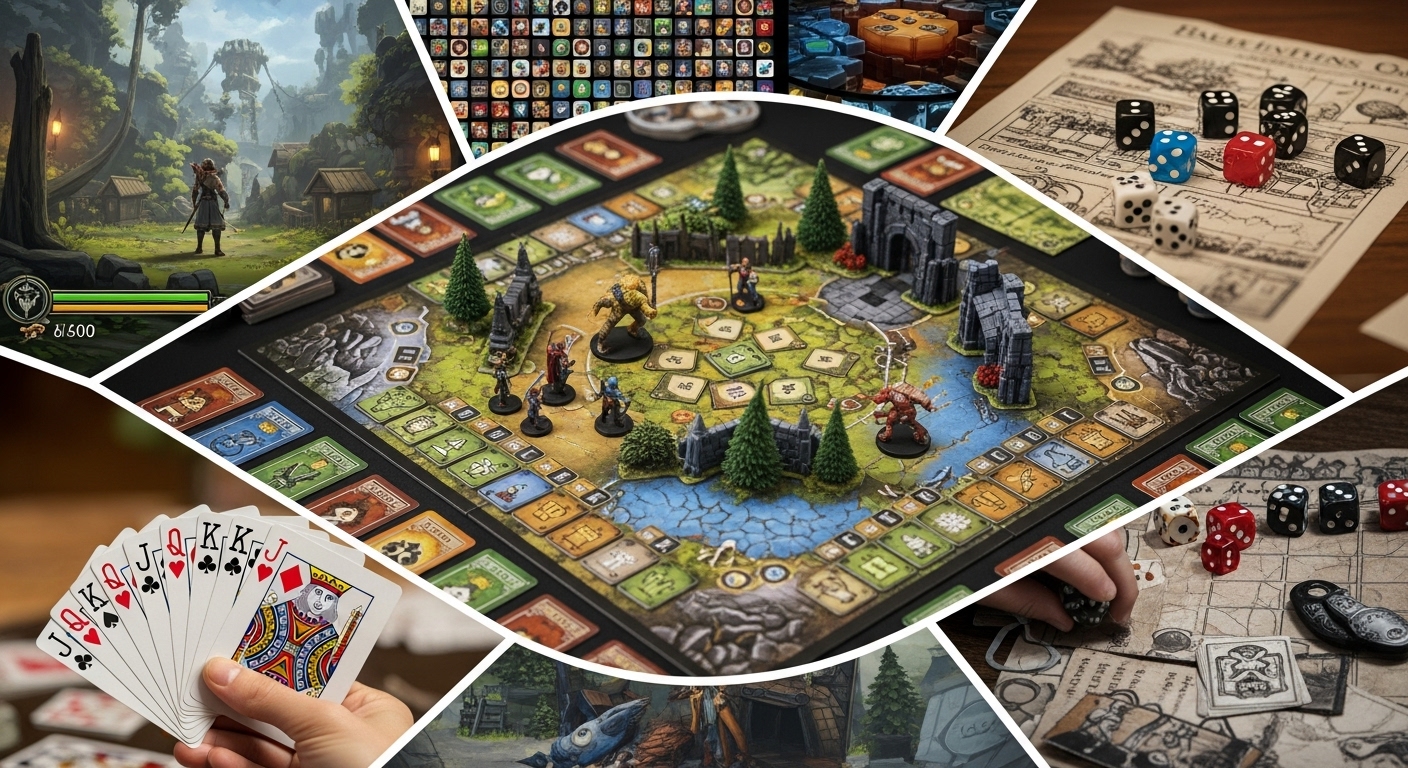






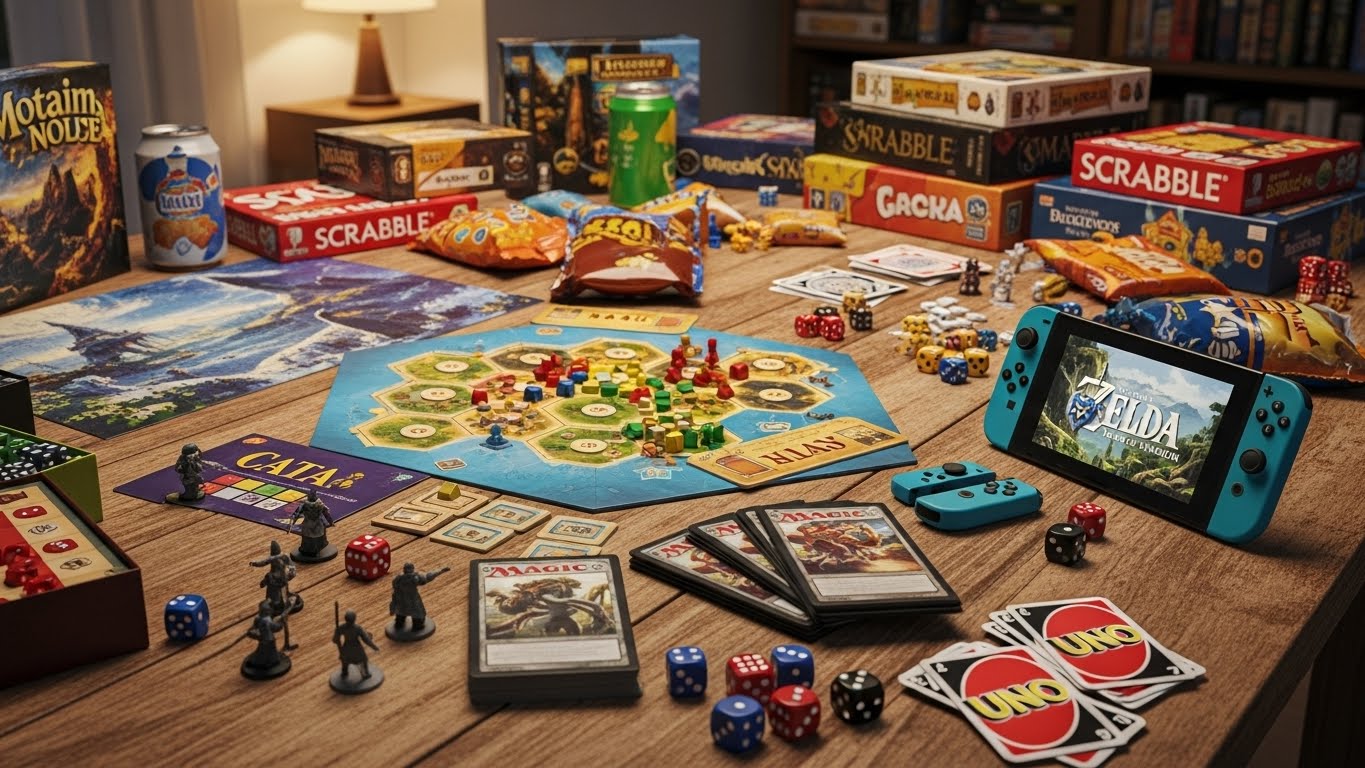
Games have always been more than just a way to pass the time. From simple board games to expansive digital universes, games challenge our minds, test our skills, and bring people together. They offer entertainment, learning, social connection, and even personal growth. In this blog post, we will explore the history of games, their evolution across platforms, the social and psychological benefits of gaming, and the exciting future of interactive play.
The Origins of Games
Games have existed for thousands of years. Archaeologists have discovered ancient dice, board games, and recreational puzzles dating back to civilizations such as Mesopotamia, Egypt, and China. These early games were not only a source of fun but also a reflection of culture, teaching strategy, fairness, and problem-solving.
Board games like Senet in Egypt and Go in China were more than entertainment; they were tools for strategy, critical thinking, and even spiritual reflection. These ancient games laid the foundation for modern gameplay mechanics, showing that humans have always sought structured forms of challenge and recreation.
The Evolution of Gaming
The modern era of games began with the introduction of electronic gaming. In the 1970s, arcade machines and early home consoles revolutionized the way people played. Games like Pong and Space Invaders captured the imagination of players and sparked a growing global interest in electronic entertainment.
The 1980s and 1990s saw the rise of consoles like Nintendo and Sega. Iconic characters such as Mario, Sonic, and Link became cultural icons. Video games started offering narrative-driven experiences, complex puzzles, and immersive worlds that extended far beyond simple high-score challenges.
The 2000s introduced online multiplayer gaming, connecting players from across the globe. Games like World of Warcraft and Counter-Strike created communities where teamwork, strategy, and communication were essential. Social gaming emerged as an important aspect of the gaming experience, showing that games could foster collaboration and friendships.
Today, gaming spans multiple platforms, including consoles, PCs, mobile devices, and virtual reality. Game genres have diversified, ranging from strategy and simulation to role-playing and first-person shooters. The industry has grown into a global phenomenon, offering endless possibilities for players of all ages and interests.
The Cultural Impact of Games
Games are not just entertainment; they are a cultural force. Video games, in particular, influence art, storytelling, music, and fashion. They inspire movies, television shows, and literature while shaping social trends. Iconic game franchises have become cultural symbols recognized worldwide.
Esports, or competitive gaming, has emerged as a global phenomenon. Millions of fans watch professional gamers compete in tournaments for games like League of Legends, Fortnite, and Dota 2. Esports has transformed gaming into a spectator sport, complete with sponsorships, prize money, and dedicated arenas.
Games also foster communities where players can collaborate, share strategies, and celebrate their passion. Platforms that support multiplayer interactions, streaming, and content sharing have made gaming a social activity, connecting people regardless of geography.
The Psychological Benefits of Gaming
Gaming offers more than just fun; it provides measurable cognitive and psychological benefits. Strategy-based games improve problem-solving skills, decision-making, and critical thinking. Puzzle games, simulation games, and role-playing adventures challenge players to think creatively and adapt to new scenarios.
Playing games can also enhance memory, attention, and multitasking abilities. Complex games that require managing multiple tasks or resources stimulate the brain, fostering mental agility and focus.
Competitive gaming teaches valuable life skills such as perseverance, teamwork, and communication. Multiplayer experiences often require players to coordinate with others, plan strategies, and adapt quickly, skills that are transferable to real-world challenges.
Additionally, gaming can provide emotional benefits. Engaging in immersive worlds can be a form of stress relief, offering an escape from daily pressures. Games designed for mindfulness, therapy, or cognitive training further show that gaming can contribute to mental well-being.
The Educational Potential of Games
Games are increasingly recognized for their educational value. Serious games and educational games teach concepts in subjects like history, science, mathematics, and language. By turning learning into interactive experiences, games engage students more effectively than traditional methods.
Gamification, the application of game mechanics in non-game contexts, has been applied in classrooms, corporate training, and personal development. Points, levels, challenges, and rewards motivate learners to stay engaged, improve performance, and enjoy the process of growth.
Simulation games, in particular, provide hands-on learning experiences. Players can explore historical events, manage virtual economies, or experiment with scientific principles in ways that are safe, engaging, and memorable.
The Social Aspect of Gaming
Games foster social interaction in ways few other activities can. Multiplayer games allow people to collaborate, compete, and build communities. Players often form long-lasting friendships through guilds, teams, and online communities.
Social gaming can also bridge generational gaps. Families and friends play together, share experiences, and create memories. Cooperative gameplay encourages teamwork, empathy, and communication, demonstrating that games are as much about connection as they are about fun.
Gaming also provides a platform for creative expression. Players create content such as fan art, mods, and custom levels, contributing to communities and inspiring others. The collaborative nature of gaming highlights its role as a cultural and social phenomenon.
The Economic Influence of Games
The gaming industry is a major economic driver. Globally, it generates billions in revenue every year. Game development requires a combination of art, programming, music, storytelling, and design, providing opportunities across multiple disciplines.
The rise of content creators, streamers, and esports professionals has further expanded the gaming economy. Players can build careers as influencers, competitors, or community leaders. This growth has made gaming not just entertainment but also a viable career path for many.
Moreover, technological advancements driven by gaming have influenced other industries. Virtual reality, augmented reality, graphics engines, and artificial intelligence have applications in education, healthcare, architecture, and simulations beyond entertainment.
The Diversity of Game Genres
The world of games is incredibly diverse, catering to every taste and interest. Role-playing games allow players to immerse themselves in stories, make choices, and explore complex worlds. Strategy games challenge logic and planning skills, while sports and racing games provide fast-paced competition.
Simulation games offer realistic experiences, from managing cities to running farms, allowing players to experiment and learn in a virtual environment. Adventure games focus on storytelling and exploration, while puzzle games test creativity and problem-solving.
Casual games, often played on mobile devices, make gaming accessible to everyone. These games emphasize short, enjoyable experiences, demonstrating that games can be both challenging and relaxing.
The Influence of Technology on Gaming
Technology continues to expand the possibilities of games. Virtual reality and augmented reality immerse players in worlds that feel real, blurring the line between the digital and physical. Artificial intelligence enhances gameplay by creating adaptive challenges and realistic non-player characters.
Cloud gaming allows high-quality experiences without expensive hardware, making gaming accessible to more people. Mobile technology ensures that games can be played anytime, anywhere, reaching global audiences like never before.
The future promises even more innovation. Games may become fully interactive experiences, personalized for individual players, with narratives shaped by real-time decisions. These advancements will continue to push the boundaries of creativity and engagement.
The Future of Gaming
The future of games is exciting and limitless. As technology advances, games will become more immersive, interactive, and personalized. Virtual worlds will expand, allowing players to engage in experiences that were once unimaginable.
Artificial intelligence and machine learning will create adaptive gameplay, where challenges respond to a player’s skill and style. Multiplayer games will continue to connect global communities, and esports will grow as a major spectator sport.
Gaming will also continue to influence culture, education, and social interaction. It will remain a platform for creativity, storytelling, and personal expression. The lines between entertainment, art, and technology will blur, creating experiences that inspire, educate, and connect.
Conclusion
Games are far more than leisure activities. They are a reflection of human creativity, culture, and innovation. From ancient board games to modern digital universes, games challenge our minds, foster connections, and provide countless opportunities for growth and enjoyment.
The industry’s evolution demonstrates that games are a powerful medium capable of shaping culture, enhancing skills, and bringing people together. As technology and creativity continue to advance, games will remain a central part of human experience, offering endless possibilities for entertainment, learning, and connection.
Games are not just about play—they are about exploration, imagination, and the human desire to connect and create. They are a testament to our ability to challenge ourselves, collaborate, and dream, making the world of games one of the most dynamic and influential parts of modern life.